Buying Farm Or Pasture Land In Bates County MO
June 25, 2026
June 25, 2026
Looking at farm or pasture land in Bates County can feel exciting and a little overwhelming at the same time. You may be picturing cattle, hay ground, a future homesite, or a mix of grazing and recreation, but rural land asks different questions than a house in town. The good news is that a little local due diligence goes a long way. Here’s what you should know before buying farm or pasture land in Bates County, MO.
Bates County has a strong agricultural footprint, which matters when you want land that fits real working uses. The 2022 Census of Agriculture reported 1,014 farms and 426,962 acres in farms, with an average farm size of 421 acres. That scale tells you agriculture is not a side note here. It is a core part of the local landscape.
The county also supports a mix of uses instead of just one type of production. According to the same census profile, 69% of agricultural sales came from crops and 31% from livestock, poultry, and related products. That mix is helpful if you are considering pasture, hay production, or a tract with more than one possible use.
Pasture is especially relevant in Bates County. The county had 121,997 acres of pastureland in farms, plus 34,540 acres of woodland. There were also 78,509 cattle and calves and 43,876 acres of forage such as hay and haylage, which shows that grazing and livestock ground already fit the area well.
Before you focus on price per acre, get clear on how you want to use the property. A tract that works well for cattle may not work as well for a future build site, and a property that looks great for hunting may need more planning for water, fencing, or access. Your intended use should guide every part of your search.
For many buyers, the goal is not just one thing. You may want pasture now, hay production later, and some room for recreation in between. In Bates County, that is a realistic goal in many cases, but it still needs to be tested against access, utilities, soil, and water layout.
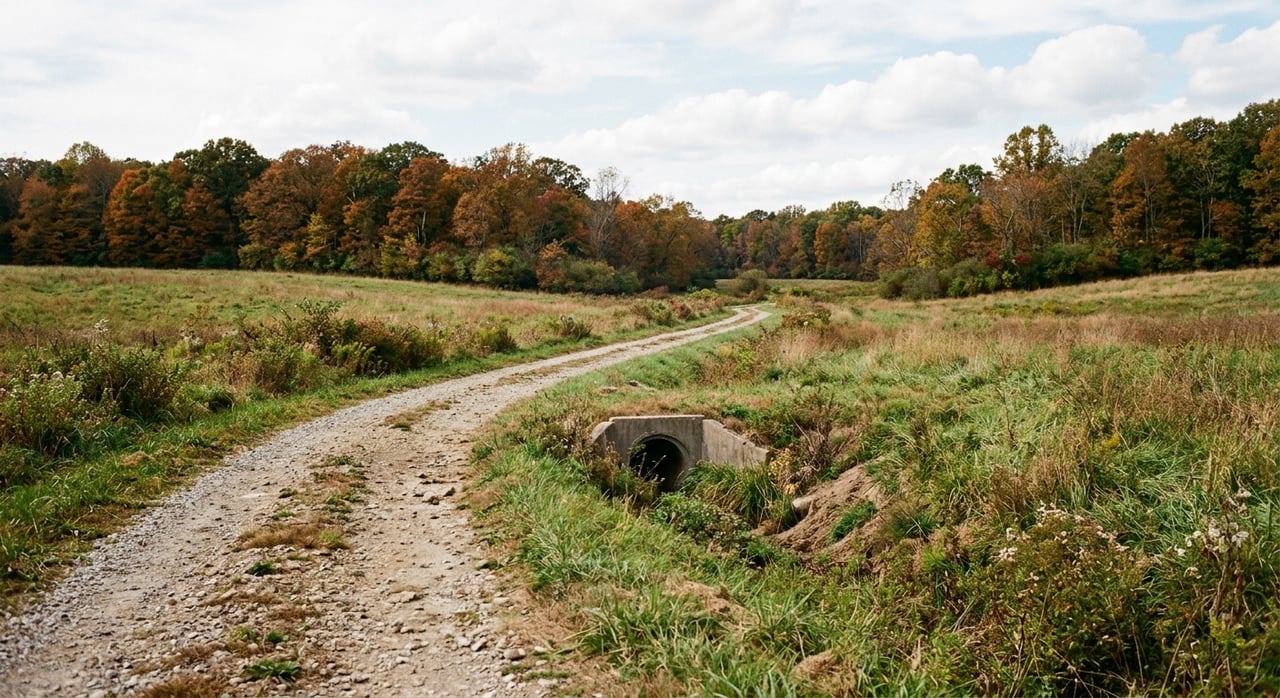
One of the biggest mistakes land buyers make is assuming that road frontage on a map solves the access question. In Bates County, access should be checked as both a legal issue and a maintenance issue. That is especially important on rural tracts where roads, culverts, and entrances can affect day-to-day use.
Bates County uses a township form of county government, and each township is responsible for grading, gravel, and maintenance of its roads. The county commission determines whether a road is opened or closed through the required statutory process. In practical terms, you want to know whether the property has recorded legal access from a public road and who is responsible for maintaining the approach.
The Bates County Recorder handles land transactions, surveys, plats of subdivisions, and tax liens, but the office also states that it does not perform lien searches, title searches, or land research. That makes title work, surveys, easements, and recorded plats especially important before you close.
Rural utilities are rarely something you want to assume. In Bates County, service depends on the exact location of the property, and a county may be served by multiple utility providers. That means utility research should happen parcel by parcel, not by general area.
The Missouri Public Service Commission says the exact location of a property determines which electric, natural gas, or water utility serves it. Missouri DNR’s Bates County page also lists multiple local drinking-water systems, including Bates County public water supply districts and the Rich Hill Public Water System. That is a good reminder that water availability is local and specific.
If a tract is not already connected to public water, make sure you confirm whether line extension is realistic before you treat the property as build-ready. The same goes for electric service. A property can look ideal on the surface and still require more utility planning than expected.
If central sewer is not available, wastewater planning becomes a major part of your decision. The Missouri Department of Health and Senior Services says onsite wastewater treatment is used where central sewer is not available, and that soil and site limitations are often the most limiting factor. In other words, a nice-looking build spot still needs the right conditions below the surface.
A suitable site may support a conventional septic tank and soil absorption system, while more constrained sites may require advanced systems. In Bates County, the Health Center’s environmental public health specialists handle sewage permits under an agreement with the state. That makes septic feasibility something to confirm early, not after you have already fallen in love with the property.
Private wells need separate care. Missouri regulates private well construction, and private well water sampling is required during installation, but after that, private well water quality is not monitored or regulated by the state. If a property has a well, do not assume that a working well automatically means water quality or long-term performance is where you want it to be.
If you only do one deep-dive step before making an offer, let it be the soil review. USDA NRCS says Web Soil Survey is the official online source for current soil data, and MU Extension notes that county soil surveys are useful for agricultural, engineering, recreational, and urban uses. For a farm or pasture buyer, this is one of the most useful tools available.
Soil surveys help evaluate flooding, seepage, foundation stability, erosion, and septic suitability. They also show slopes, drainage, roads, streams, township sections, and other features that matter on rural land. That is valuable whether you are buying open pasture, hay ground, or a tract with a future building plan.
MU Extension highlights soil traits such as texture, slope length, slope steepness, drainage, acidity, stoniness, and depth. When you walk the land, compare what you see to what the soil data suggests. Pay attention to where water stands, where it runs, where erosion begins, and how the slopes feel for equipment or livestock movement.
Low ground can be productive and attractive, but it can also come with limits. FEMA’s Flood Map Service Center is the official public source for flood-hazard information, and Bates County’s surveyor serves as the local flood plain manager. If a tract includes creek bottoms, drainage crossings, or low corners, that should be part of your early review.
Floodplain questions matter for more than home construction. They can affect where you place barns, lanes, permanent fencing, or other improvements. Even if part of the property is ideal for grazing or recreation, certain low areas may need extra caution and planning.
If your goal is grazing, you want to look beyond total acres. Missouri DNR’s grazing-management practices focus on rotational grazing, water development, water distribution, fencing, lime, and seed. That is a practical checklist for figuring out how usable the land really is from day one.
MU Extension also notes that fence-and-water systems should fit the scale, landscape, labor, and capital available for the operation. A property with decent grass but poor water layout or weak cross-fencing may need more investment than expected. On the other hand, a tract with workable pasture, solid water access, and efficient fencing may offer stronger day-to-day function.
Many rural buyers want more than pasture alone. You may want room for livestock while still keeping the property useful for wildlife and general recreation. In Bates County, that can be a realistic fit, especially on tracts that combine pasture with woodland or varied habitat.
The Missouri Department of Conservation says good wildlife habitat depends on food, water, and cover. It recommends dividing a property into habitat types such as cropland, grassland including pasture, forests, savannas, glades, and wetlands. That framework can help you evaluate whether a property supports your recreation goals without losing sight of its farm use.
Taking notes during all seasons is also a smart approach when possible. A tract can feel very different in dry weather than it does during wet periods or active growth. If you are buying for both utility and enjoyment, that broader view can help you make a stronger decision.
Rural land purchases usually go best when you work through a clear checklist. In Bates County, the most useful local contacts for due diligence include the Bates County Recorder for deeds, plats, and recorded surveys, the Bates County Surveyor for road and floodplain questions, and the Bates County Health Center for sewage permits. Utility verification and soil review should be part of that process as well.
A smart plan is not about making the purchase harder. It is about making sure the tract truly fits your goals before closing day. When you ask the right questions early, you can move forward with more clarity and fewer surprises.
Buying land is a different kind of decision than buying a typical home, and that is exactly why local guidance matters. If you are considering farm or pasture land in Bates County, having someone in your corner who understands rural property can help you ask better questions, spot issues early, and move forward with confidence. When you are ready to talk through your goals, connect with Dez Poole.
Stay up to date on the latest real estate trends.


Providing a seamless real estate journey through thoughtful planning, clear communication, and a deep understanding of the market, helping clients make empowered decisions whether buying, selling, or investing.