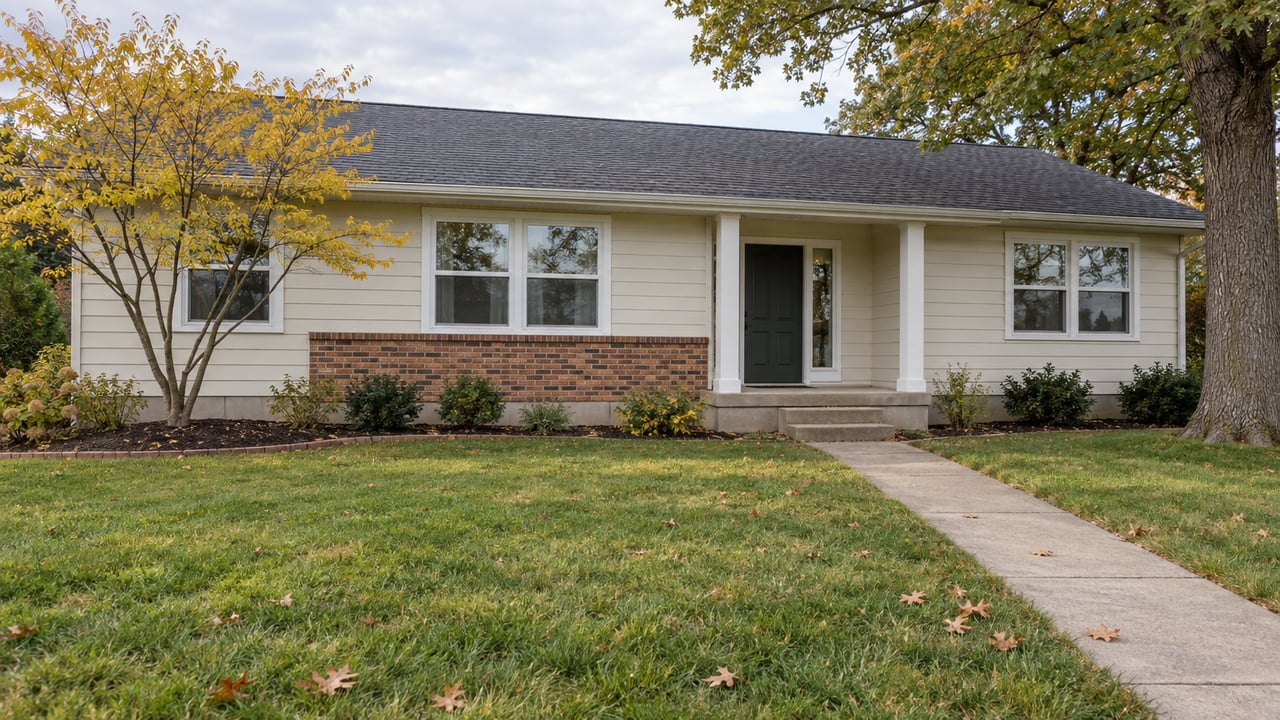
Linn Valley Lakes Lots: Understand Water and Sewer Costs
October 8, 2026
October 8, 2026
Two lots near the 135-acre Main Lake can list at the same price and still cost their owners very different amounts. The City of Linn Valley is partway through a public water project that moves the community from hauled water to metered city water one line at a time. When a meter is set at the curb, the owner gets a connection deadline, a connection fee and a monthly minimum bill. If you're shopping in Linn Valley Lakes this fall, the line letter on the lot matters as much as the price.
The rules come from two city documents adopted in December 2025. Ordinance 276 says any property used for "human occupancy, employment, recreation, or other purpose" within 100 feet of a public water main must connect to it, "at his or her own expense." It also says any water tank already on the property has to be decommissioned and fully disconnected from the home's plumbing. The owner pays for that too, and the city keeps the right to inspect the work.
The connection fee is $2,000. It's set in Resolution 144 and repeated in the ordinance. City crews or a city designee handle the tap and run the line from the main to a meter box. Past the meter, the city's responsibility ends. Anything on the house side of the meter, including tank decommissioning, is the owner's cost. That cost doesn't show up in a list price.
At a May 16, 2026 town hall, the city said owners would have 90 days after meter installation to connect. The city also said it would pay for the first 100 feet of main line. If you're buying a lot where the meter went in recently, part of that window may already be gone. If no meter has been set yet, the window hasn't started.
The city's June 22, 2026 progress summary put the overall waterline project at about 55% complete. It listed March 27, 2027 as the overall completion date. According to a summary of the August 24 council meeting published by Citizen Portal, the city engineer reported about 62% and said completion was expected next year. Citizen Portal labels its summaries as AI-generated, so treat that figure as approximate.
As of June 22, the project's lines fell into these groups:
| Status as of June 22, 2026 | Lines |
|---|---|
| Tested, meters installed, in service, permits available | TM1, TM2, TM3, TM4, TM5, E1 |
| Meters being installed | G, G1, K7 |
| Next for meters | I7, K4, K5, K6 |
| Main installation recently completed | F, P2, P3, Q2, Q3, Q4 |
| Work beginning | Q5, Q6 |
| Installation continuing | B, E2, F1, F4 |
The scope grew in December 2025. On December 8 the council approved an amendment that added 113 meters and 180 days, raising the construction contract by $410,676 to $16,259,733. The city's online minutes index hasn't posted packets past July, so it's been months since the last full public list of meter-ready lines. For any specific lot, City Hall can tell you which line it's on and whether a meter has been set.
Here's why the line letter shows up in an owner's monthly budget. Until a lot connects, water typically comes by truck from the Linn Valley Lakes POA hauling service. Once it connects, the city bills it.
| City metered water | POA hauled water | |
|---|---|---|
| Base charge | $65/month minimum: $20 meter fee plus $45 for the first 3,000 gallons | $40 per 1,000 gallons or $80 per 2,000 gallons |
| Additional usage | $10 per 1,000 gallons | Priced per delivery |
| Extra charges | 2.5% annual rate increase | $30 for same-day tickets received 8 to 11 a.m. Monday through Friday; $150 after 11 a.m. or on weekends; $300 on listed holidays |
| One-time cost | $2,000 connection fee | None listed |
Run 3,000 gallons a month through both columns at the posted 2026 rates. City water comes to $65. Three thousand gallons hauled at $40 per 1,000 comes to $120, before any after-hours fee. For a full-time household, that gap repeats every month. For a weekend cabin that uses little water, the $65 minimum may cost more than the occasional delivery, and the $2,000 fee is due either way.
The POA also posts a separate metered water rate: $45 for the first 1,500 gallons, then two cents a gallon. That appears to describe a different system than the city's meters. A seller's water bills only help you if they come from the same system the lot will use after it connects.
Water is only half the utility picture, and the sewer boundaries don't follow the water project's lines. The city says homes inside its low-pressure sewer district must use the grinder-pump system. Homes on holding tanks get pump-and-haul service from the POA. The city's utilities page links a district map and a list of affected lots.
The costs on each side of that map are very different:
City sewer bills are due on the ninth with a $2.50 late charge. City code makes sewer charges a lien on the property, and charges unpaid for 60 days can be certified to the county and collected like taxes. That makes a title search on a resale lot worth the time.
The POA assessment is the one cost that doesn't depend on where a lot sits. For 2026 it's $480 per lot. The POA says the assessment covers administration, maintenance, operations and upkeep of the facilities, which include two pools, Deer Trace Golf Course, the clubhouse, the campground and the lake-access docks. The board reviews the amount each December and may adjust it by the change in the federal CPI.
Two details matter for buyers. Each separately owned lot is assessed, so a buyer who adds the empty lot next door to the home lot pays twice. And a balance more than 90 days past due accelerates the full year's amount. After that come 6% annual interest, loss of amenity privileges, a 30% collection fee, and possible lien or foreclosure steps.
Plenty of buyers look at a lot to camp on before they build. Here the water project and the zoning code overlap.
On an R-1 lot with no residence, city zoning allows one RV, and only from May 1 through September 30. On an R-2 multi-purpose/camping lot with no primary residence, one RV may serve as a permanent or temporary dwelling with no time limit. The POA adds its own limit: camping on a building lot is capped at 14 days, and then the RV or tent has to be removed.
A city letter explains how meters apply to RV properties. If a meter is installed and service is available, the owner owes the $65 monthly minimum even without connecting. RV owners can ask the city to opt out before the meter goes in. That means a seasonal RV lot on a line that already has a meter carries a year-round bill. A similar lot whose owner opted out in time doesn't.
Some rules that will shape these costs were still unsettled at the last public record:
Does the 90-day connection window carry over to a buyer? The town-hall minutes tie the window to the meter installation date, not to a sale. Ask the city for the meter date on the specific lot before closing.
Is there a penalty for missing the window? No public record shows enforcement so far. The meter-refusal policy discussed in August suggests the city is working on how it will handle that.
What about lots with lakefront? They have their own rules. Any deck in the common strip needs approval from the POA Architectural Control Committee and the city, and it's capped at 168 square feet. The lakefront-use agreement requires $500,000 in insurance, and a buyer who wants to keep existing improvements must sign a new agreement.
If you're weighing a lot or cabin in Linn Valley Lakes, I'll help you track down what the listing won't tell you. That means which line the lot is on, whether a meter has been set, which side of the sewer map it falls on, and what owning it will actually cost before you make an offer. Dez Poole works these Linn County lake lots up close. Schedule Free Consultation and bring the lot number.
This article is general information, not legal, tax or financial advice. Consult a qualified professional about your situation.
Stay up to date on the latest real estate trends.


Providing a seamless real estate journey through thoughtful planning, clear communication, and a deep understanding of the market, helping clients make empowered decisions whether buying, selling, or investing.