How to Buy Recreational Land in Miami County, KS
April 23, 2026
April 23, 2026
Buying recreational land in Miami County, KS can be exciting, but it is also easy to miss details that affect how you can actually use the property. If you are picturing weekends spent fishing, hunting, riding out to a quiet campsite, or planning a future cabin, the right parcel needs more than good scenery. You need to know how access, utilities, permits, floodplain concerns, and Kansas use rules can affect your plans. Let’s dive in.
Miami County offers the kind of rural setting that draws buyers looking for space, privacy, and outdoor use. The county’s rural-living guidance also makes it clear that buyers should pay close attention to practical issues like access, utilities, and surrounding land uses before moving forward.
The area also benefits from established outdoor destinations. According to Miami County’s rural living guide, Hillsdale State Park is in Miami County, with about 4,500 acres of surface water for fishing and more than 8,000 acres of public land managed around the lake. The county is also home to Miami State Fishing Lake, which offers 101 acres of water, a boat ramp, a courtesy dock, and fishing piers.
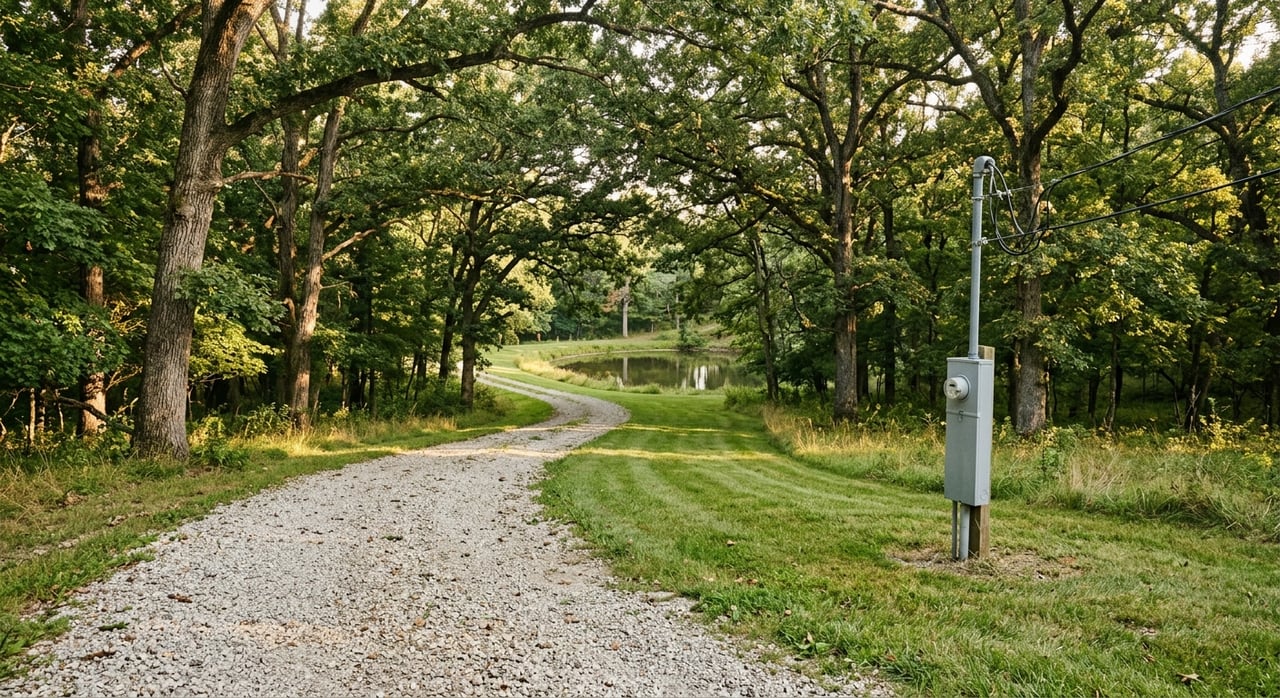
A beautiful parcel does not help much if you cannot legally and practically reach it. Before you make an offer, confirm that the property has deeded access and a usable entrance.
Miami County warns that you should not assume property lines based on fences or hedgerows. The county also advises replacing verbal access agreements with a recorded easement, because informal arrangements may not protect you later. That makes a current survey and documented access two of the first items to verify.
If the parcel needs a new or rebuilt driveway entrance, Miami County’s Road & Bridge department requires permission before that work is done. The county reviews sight distance, spacing, drainage, and culvert design, so an entrance location that looks simple on a map may still need approval.
If the property sits on a gravel road, ask what county maintenance applies and whether dust abatement is available. These details can affect both day-to-day use and your long-term enjoyment of the land.
With recreational land, buyers sometimes focus on trails, timber, ponds, or hunting potential first. Those features matter, but you also want to know whether the parcel is legally created and buildable if your plans include a cabin, barn, shop, or future home.
Miami County offers a zoning verification application that can help confirm whether a property has been legally created and whether it is buildable. This can be an important step before you commit to a parcel based on future plans.
It is common for rural buyers to look at a fence line and assume that is the property boundary. Miami County specifically warns against that approach.
Instead, ask whether a current survey is available and whether it shows corners, easements, and access points. This helps you understand what you are actually buying and whether any part of your intended use could cross into someone else’s rights.
The question “Can I build here?” often depends on water, wastewater, and utility access. Even for mostly recreational use, those issues matter if you want a cabin, restroom, RV setup, or future homesite.
According to Miami County’s rural living guide, a water well permit is required, wells must be registered with Code Services, and wells must be installed by a KDHE-licensed contractor. The county also requires an on-site wastewater permit for new construction and remodeling before a building permit can be issued.
A parcel can fall within a utility service territory without having service extended to the site. The county notes that territory does not guarantee a line is already there or that capacity is currently available.
That means you should ask not only who serves the property, but also what it would take to actually connect. The county also notes that cell reception may be limited in some areas, which can matter if you plan to work remotely or depend on mobile service while on the land.
Floodplain status can be one of the biggest practical issues for recreational land. It can affect where you build, how you access the property, and whether certain improvements are even realistic.
Miami County participates in the National Flood Insurance Program and requires permits for development in the floodplain. The county also notes that floodplain issues can affect construction, culverts, grading, fill, storage, and road access during high water.
Before or during your property search, it helps to review the county’s GIS mapping tools. These tools show overlays such as floodplain, tax unit, city limits, land size, and appraisal data.
The county notes that GIS data can contain errors, so it should be your starting point, not your final answer. If floodplain is a possibility, you will want to confirm what permits or restrictions could apply before moving ahead.
Recreational land buyers often assume that if a parcel is rural, they can use it however they want. In reality, you should review zoning, recorded easements, subdivision covenants, and mineral rights before you buy.
Miami County states that zoning applies in the unincorporated area, though land used for agricultural purposes is treated differently under the code. The county also notes that much of the area is zoned Countryside or Agriculture, with varying lot-size rules, so the exact parcel matters.
Even if zoning seems to fit your plans, other restrictions may still affect the property. The county advises buyers to check subdivision covenants, easements, and mineral rights.
That last point is especially important on rural land. If mineral rights have been severed, subsurface extraction rights could affect the surface in ways you may not expect.
If hunting is part of the reason you are buying, make sure you understand how Kansas permission rules work on private land. The first legal question is not whether the habitat looks good. It is whether access and use are clearly allowed.
According to the Kansas Department of Wildlife and Parks, it is illegal to hunt, shoot, or trap on private land without the owner’s permission. KDWP also states that hunting from public roads requires permission from the adjacent landowner, and written permission is required on land marked for written-permission-only access or purple paint. You can review those rules through KDWP’s general trespass guidance.
If you want your purchase to include both private use and nearby public opportunity, it is smart to compare parcels against known recreation areas. Miami County’s location near Hillsdale State Park and Miami State Fishing Lake can add flexibility for buyers who want multiple outdoor options.
KDWP also provides tools such as its Hunting Atlas for public land and WIHA reference, but access windows are property-specific. That means you should treat nearby public access as a bonus, not a substitute for understanding the land you are buying.
A pond on the property can be a major selling point, but not every pond is treated the same under Kansas rules. The details matter if your plans include private fishing or managing the water feature over time.
KDWP explains that a pond is considered a private pond only if it is manmade, entirely on one landowner’s or lessee’s property, and not connected in a way that allows fish to pass in or out. In that case, no fishing license is required and the landowner or tenant controls access. You can review that distinction in KDWP’s private and non-private pond guidance.
If the waterbody is connected, jointly owned, or otherwise classified differently, the rules can change. That is why it helps to ask exactly how the pond or water feature is classified before you assume it works as a fully private fishing spot.
Some buyers want more than a place to visit on weekends. They want to improve wildlife habitat, manage a pond, or make the property better over time.
KDWP says landowners can get technical assistance from KDWP, NRCS, and Kansas State University on pond and wildlife habitat projects. If that kind of long-term land stewardship is part of your plan, it is worth exploring the support described in KDWP’s pond and habitat resources.
When you are buying recreational land, the order of your due diligence matters. It can save you time, money, and frustration.
A practical sequence in Miami County is:
That order matches the way Miami County organizes its tools and guidance and helps you answer the biggest deal-breaker questions first.
Recreational land purchases can look simple at first and become more complex once you start checking access, permits, and use restrictions. Having someone who understands rural property can help you ask better questions before you commit.
If you are thinking about buying recreational land in Miami County or nearby eastern Kansas, Dez Poole can help you evaluate land, access, and property-use fit with practical local guidance.
Stay up to date on the latest real estate trends.



Providing a seamless real estate journey through thoughtful planning, clear communication, and a deep understanding of the market, helping clients make empowered decisions whether buying, selling, or investing.