Considering An Investment Property In Bourbon County KS
May 7, 2026
May 7, 2026
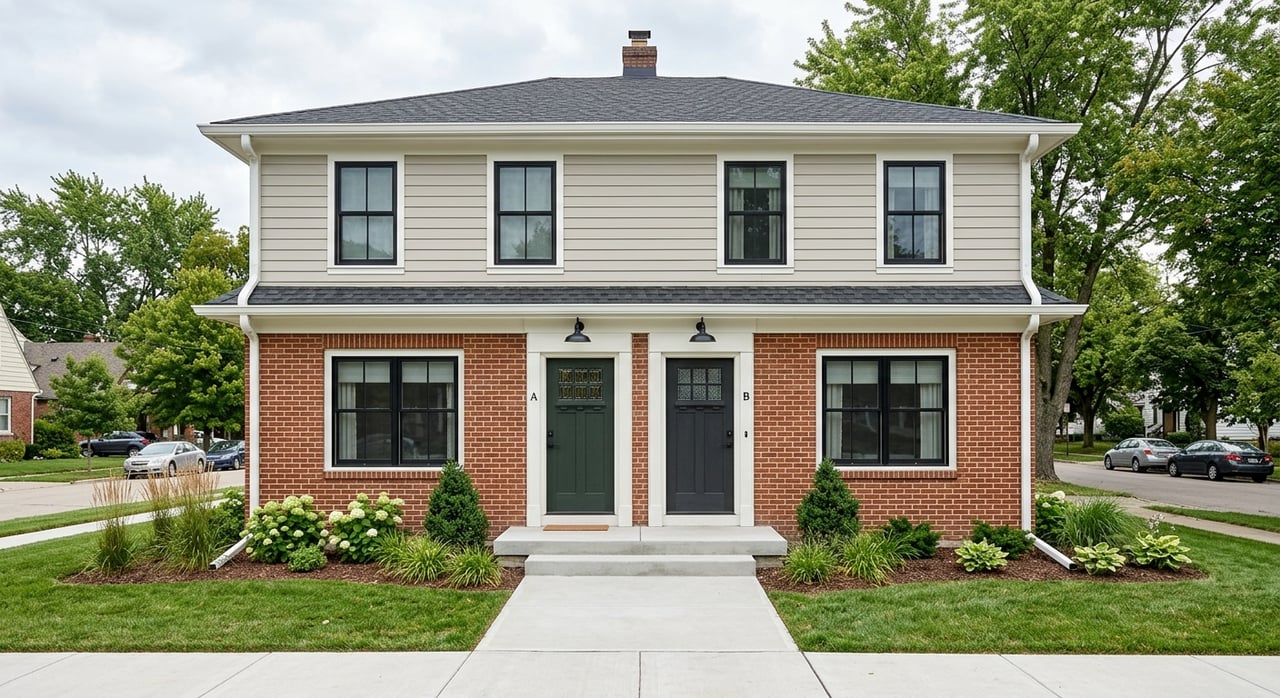
Thinking about buying an investment property in Bourbon County, Kansas? You are not alone. This market can look appealing at first glance because home values and rents are relatively modest, but the real story is in the details. If you are considering a rental, mixed-use building, or rural acreage, understanding how the property is used can matter just as much as the price. Let’s dive in.
Bourbon County is a small rural market centered around Fort Scott. Recent data shows the county had an estimated population of 14,319 in July 2025, with Fort Scott at 7,563 in 2024. That smaller scale can appeal to investors who prefer practical opportunities over high-priced, fast-moving metro competition.
The housing numbers help explain the appeal. The Census Bureau reports a median owner-occupied home value of $113,800 in Bourbon County and $100,500 in Fort Scott. Median gross rent is also modest at $752 countywide and $755 in Fort Scott, which points to a market where affordability is a major part of the conversation.
This is not a market to approach with big-city assumptions. Bourbon County tends to reward investors who look closely at use, condition, tax treatment, and true local demand rather than chasing rapid appreciation.
Bourbon County has a relatively small housing stock. The 2020 Census profile used by the University of Kansas listed 6,770 housing units, including 1,104 vacant units. That matters because in a smaller market, vacancy can have a bigger impact on your numbers.
The county also has a 74.0% owner-occupied rate, while Fort Scott is at 66.4%. Those figures suggest a market where homeownership is still the dominant pattern, but Fort Scott may offer more activity for rental-focused buyers than some outlying areas.
Income levels also shape what an investment property needs to do here. Median household income was reported at $59,238 in Bourbon County and $52,159 in Fort Scott. In a market like this, your deal needs to make sense with realistic rent expectations, steady upkeep, and careful tenant screening.
If you are looking for a more traditional investment property, Fort Scott likely deserves a close look. It sits at the intersection of US Highways 69 and 54, and local sources point to activity tied to manufacturing, warehousing and distribution, agriculture, retail, social services, healthcare, education, and tourism.
That mix can support rental demand, but it still pays to stay specific. One block, one building type, or one condition issue can make a major difference in a smaller market. It is smart to study occupancy history and actual demand in the exact area you are considering instead of treating the whole county like one uniform rental market.
The Fort Scott Area Chamber also maintains landlord and rental housing information. That adds to the picture of a relationship-driven rental environment where local knowledge can make a meaningful difference.
Bourbon County and Fort Scott may also attract buyers interested in small storefronts, live-work spaces, or buildings with both commercial and residential uses. Downtown Fort Scott, with its historic district, events, murals, walking trail, and tourism activity, may create opportunity for the right property in the right spot.
Still, mixed-use investing here comes with more moving parts than buying a single-family rental. In Kansas, real property is generally classified based on how it is used on January 1. If a parcel has more than one use, it may receive more than one classification, and if those uses cannot be physically separated, the parcel may be classified by its predominant use.
That means a building with retail on the main level and apartments above may have tax and valuation consequences that are not obvious from the listing price alone. Before you buy, you should understand how the property is currently classified, how your intended use fits, and whether a change in use could affect your carrying costs.
Bourbon County has a strong agricultural identity. The 2022 USDA county profile counted 666 farms and 311,422 acres in farms, with an average farm size of 468 acres. It also found that 98% of farms were family farms.
For buyers considering pasture, hay ground, or long-term acreage holds, that is important context. This is a county where agricultural land is a major part of the local landscape, not just a niche property type.
The county’s farm economy also has clear production patterns. Livestock, poultry, and related products accounted for 69% of farm sales, while crops made up 31%. Key categories included forage and hay, soybeans, corn, and wheat.
If you are looking at land instead of a residential rental, your investment story may be based on agricultural use, lease income, or long-term land strategy rather than monthly rent from a house or duplex. That changes how you should underwrite the deal.
One of the biggest issues in Bourbon County investment property is tax classification. In Kansas, residential real property is assessed at 11.5%, commercial real property at 25%, vacant lots at 12%, and land devoted to agricultural use at 30%.
Those numbers do not tell the whole story by themselves, but they do show why use matters. A property that looks attractive on paper may perform very differently depending on whether it is treated as residential, commercial, vacant, agricultural, or some combination.
Kansas guidance also makes clear that the county appraiser can assign more than one classification when a parcel has mixed agricultural and non-agricultural uses. For example, a tract with a homesite and productive ground may not be treated as one simple category. That is why buyers should review classification early, not after closing.
Bourbon County’s 2025 budget shows a total mill levy of 57.869. For an investor, that is an important budget item to factor into cash flow from the beginning.
Timing matters too. According to the county’s audited financial statements, property taxes are assessed on a calendar-year basis and become a lien on November 1. They may be paid in two installments on or before December 20 and May 10.
That schedule can affect your first-year numbers, closing prorations, and reserves. If you are comparing more than one property, it is worth looking at not just the annual tax amount but also when those payments will hit your budget.
If you are considering a rehab project, adaptive reuse, or a property that needs meaningful improvements, Bourbon County’s Neighborhood Revitalization plan may be worth a closer look. The county budget includes a Neighborhood Revitalization rebate line, and the county plan provides rebates for qualifying residential, agricultural, and commercial or industrial improvements.
The term lengths vary by property type. The plan text provides five-year terms for residential and agricultural projects and ten-year terms for commercial or industrial projects. That could make a difference for buyers planning to improve a property rather than simply hold it as-is.
As always, you will want to confirm whether the specific property and area still qualify and how the program applies to your project. For the right deal, though, this is one more reason to look beyond sticker price.
If the property is outside town or has rural features, utility and wastewater questions deserve special attention. Bourbon County’s sanitation code states that a septic or alternative wastewater system must be inspected and approved, and a use permit issued, before the system can be used.
The county code also ties inspections to new property and transfers. If you are buying a property that may be rented, this is the kind of issue you want to understand before closing, not after you take ownership.
It is also wise to confirm whether the property is on public sewer and water or depends on private systems such as septic or a well. Rural properties can offer flexibility, but they usually require more detailed due diligence.
Before you move forward on an investment property in Bourbon County, ask practical questions that match the local market:
Simple questions like these can help you avoid expensive surprises. In a market like Bourbon County, solid due diligence is often what separates a workable deal from a frustrating one.
Bourbon County can make sense if you are looking for practical entry points, modest price points, and property types that include rentals, mixed-use buildings, or rural acreage. The clearest opportunities appear to be Fort Scott rentals, small commercial or live-work buildings, and acreage with a clear agricultural use case.
At the same time, this is not usually a market for hands-off investing or fast appreciation assumptions. You will want to pay close attention to taxes, classification, maintenance, local demand, and the exact income story behind the property.
If you like the idea of a smaller Kansas market and want a straightforward view of the risks and opportunities, Bourbon County may be worth a serious look. The key is buying with a plan that fits the property and the local realities.
If you want a practical second opinion on an investment property, rural tract, or mixed-use opportunity in eastern Kansas, Dez Poole offers hands-on guidance backed by local market knowledge and experience across residential, land, commercial, and investment transactions.
Stay up to date on the latest real estate trends.
Providing a seamless real estate journey through thoughtful planning, clear communication, and a deep understanding of the market, helping clients make empowered decisions whether buying, selling, or investing.